Case Study
Honeywell
Providing firmware and test automation developers who worked inside the product team on device firmware and the automated test module for connected building products, so releases shipped faster without risking field reliability.
Get Started- Industry
- Industrial Technology and Building Automation
- Business Type
- B2B Enterprise
- Services
- Hire Firmware Engineers, Hire QA Automation Engineers, IoT Engineering
- Technology
- C, C++, FreeRTOS, Zephyr, ARM Cortex M, BLE, Modbus, BACnet, Python, Jenkins, Azure IoT Hub
About the Client
Honeywell is a global industrial technology company whose products run in buildings, factories, airports and homes around the world. Its building automation range includes controllers, sensors and gateways that manage heating, cooling, lighting, access and safety systems in commercial buildings.
Customers now expect these devices to be connected, secure and updatable over the air. That means more firmware, more device variants and more testing for every release. A defect in the field can mean a site visit, a safety review or a building that stops working as it should, so release quality matters as much as release speed.
Honeywell owns the product, the roadmap and every release. Javixor Labs provided developers who worked inside its own team on one part of it: the device firmware and the automated test module for its connected building products. This case study covers that work only.

Business Problem

The firmware itself was proven in the field. The pressure came from the growing number of products, features and checks that every release now had to pass. These were the main issues.
- Firmware for several controller and sensor families had grown over many years and was hard to change safely.
- Adding a new feature to one device family often broke behaviour on another that shared the same code.
- Most device testing was manual and depended on a few experienced engineers and a small lab.
- Over the air updates needed stronger checks so a bad image could never leave a device unusable.
- Security requirements for connected products were rising, with more scrutiny from customers and regulators.
- Protocol support for BACnet, Modbus and BLE varied between products and was hard to keep consistent.
- Bug reports from the field arrived with little data, so engineers spent days reproducing issues.
- Release dates slipped because validation could not keep pace with development.
- The internal team was busy with new product work and had little time for test automation.
- The business wanted a repeatable way to validate thousands of device configurations before every release.
The Challenges We Faced
Shared Legacy Code
Many products shared one firmware codebase, so every change needed careful checks across device families. A small change in shared code could affect timing on a device the developer never touched.
Hardware in the Loop
Tests had to run on real devices and real sensors, not only on simulators, to catch timing faults. Simulators missed faults that only show up with real sensors, real wiring and real electrical noise.
Update Safety
Over the air updates needed signed images, fallback slots and recovery paths for power loss mid update. A failed update on a rooftop controller can mean a technician visit, so recovery had to be automatic.
Protocol Consistency
Each building protocol had edge cases that behaved differently across firmware versions. Some protocol behaviour only appeared with specific third party devices on the same network.
Security Hardening
Secure boot, key storage and encrypted links had to fit inside tight memory limits. Older chips had very little spare memory for security features.
Field Diagnostics
Devices needed better logs without filling flash memory or slowing real time tasks. Engineers needed more detail from the field without logs filling up storage.
Lab Capacity
A single physical lab limited how many test runs could happen each day. Test runs were booked days ahead, so feedback on a change came far too late.
Safety Standards
Every change had to respect safety rules and documentation needs for building systems. Documentation and traceability were part of every release, not an afterthought.
Solution We Provide
Firmware release 4.2
IllustrationDevelopers for the Firmware and Test Module
Javixor Labs provided 12 developers across embedded firmware, IoT and test automation. They joined the client's product engineering group and worked on one module: device firmware and the automated validation suite that checks it. The client's engineering leads owned the architecture, the roadmap and every release decision. Our developers followed the client's coding standards, review rules and safety processes from the first week.
Firmware engineers first separated hardware specific code from shared logic using a clear hardware abstraction layer. Each device family now builds from the same core with its own board support package, so a change to one product no longer breaks another without warning. The team moved newer products to Zephyr and kept long life products on FreeRTOS with a cleaner structure.
For updates, the team built a dual slot bootloader with signed images, version checks and automatic rollback. If power drops during an update or a new image fails its health check, the device returns to the last good version on its own. Secure boot and protected key storage were added within the memory budget of each chip.
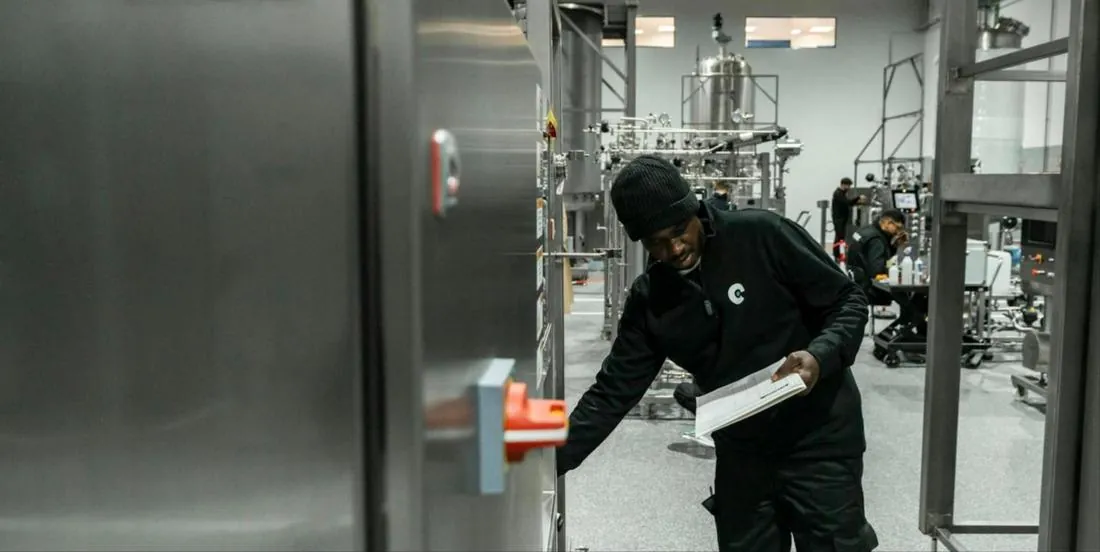
Validation changed the most. The team built a hardware in the loop test rig with racks of real controllers and sensors, driven by Python test suites and Jenkins pipelines. Every firmware build now runs protocol tests for BACnet, Modbus and BLE, power cycle tests and update tests across thousands of device configurations overnight, with results ready for engineers each morning.
Field diagnostics were improved with compact structured logs and a crash capture area that survives a reboot, so support teams can send engineers real data instead of a description.
Knowledge transfer was built into the work. The Javixor Labs team documented each test rig, pipeline and tool, ran walkthroughs with the client's engineers and paired with them on new test cases. The client's teams now add tests for their own features using the same framework, so automation keeps growing with every product.
Work was planned in quarterly increments agreed with the client's product managers. Each increment had a clear goal, such as moving a device family to the new architecture or adding a protocol test pack, so progress was easy to measure and report to leadership.
Get StartedImpact
Illustration of the reporting view. Client screens stay private.
Firmware releases now pass through a repeatable, automated validation process before they reach any building. Engineers spend less time reproducing bugs and more time building features, and over the air updates are safe to roll out at scale. Release dates are now planned around development work instead of lab availability, and field issues arrive with the data needed to fix them quickly. The same validation setup is ready for new device families as the product range grows.
Engineering Highlights
Reliable Firmware at Scale
Clean architecture, safe updates and overnight hardware testing make every release predictable. Every layer was designed with field reliability in mind, from the bootloader up to the nightly test reports.